GEORGETOWN, CA — A mountain lion attacked two brothers searching for shed deer antlers near Georgetown on Saturday afternoon, killing one and seriously injuring the other, according to El Dorado County sheriff’s officials. Deputies later shot the cougar, and wildlife officers collected the animal for examination.
At a glance
- Animal: Mountain lion, also called a cougar or puma
- Where: Near Georgetown, in the woods by El Dorado National Forest, northeast of Sacramento
- When: Saturday afternoon, with the 911 call placed at about 1:13 p.m. PT
- What happened: Two brothers were attacked while looking for shed antlers; one died and the other was taken to a hospital
- Status: The mountain lion was dispatched and the body was collected for further examination
- Anyone hurt: Yes. One brother died, and the 18-year-old suffered traumatic facial injuries
What happened
El Dorado County sheriff’s officials said the younger brother called 911 after the attack and reported that the pair had been attacked by a cougar and separated during the encounter. The call came in at about 1:13 p.m. PT.
Deputies and paramedics arrived near Georgetown around 1:34 p.m. They found the injured teenager, began first aid, and then expanded the search for his brother. The sheriff’s office said deputies found the older brother lying motionless on the ground with the mountain lion crouched between them.
Deputies fired their guns to drive the animal away so they could reach the victim, officials said. By the time they got to him, he was dead. The surviving brother was taken to a local hospital, and officials did not immediately release his condition.
California Department of Fish and Wildlife game wardens and an El Dorado County trapper searched the area afterward. Officials said the cougar was dispatched and its body was collected. DNA samples from the scene matched the dead mountain lion, according to authorities.
About the animal
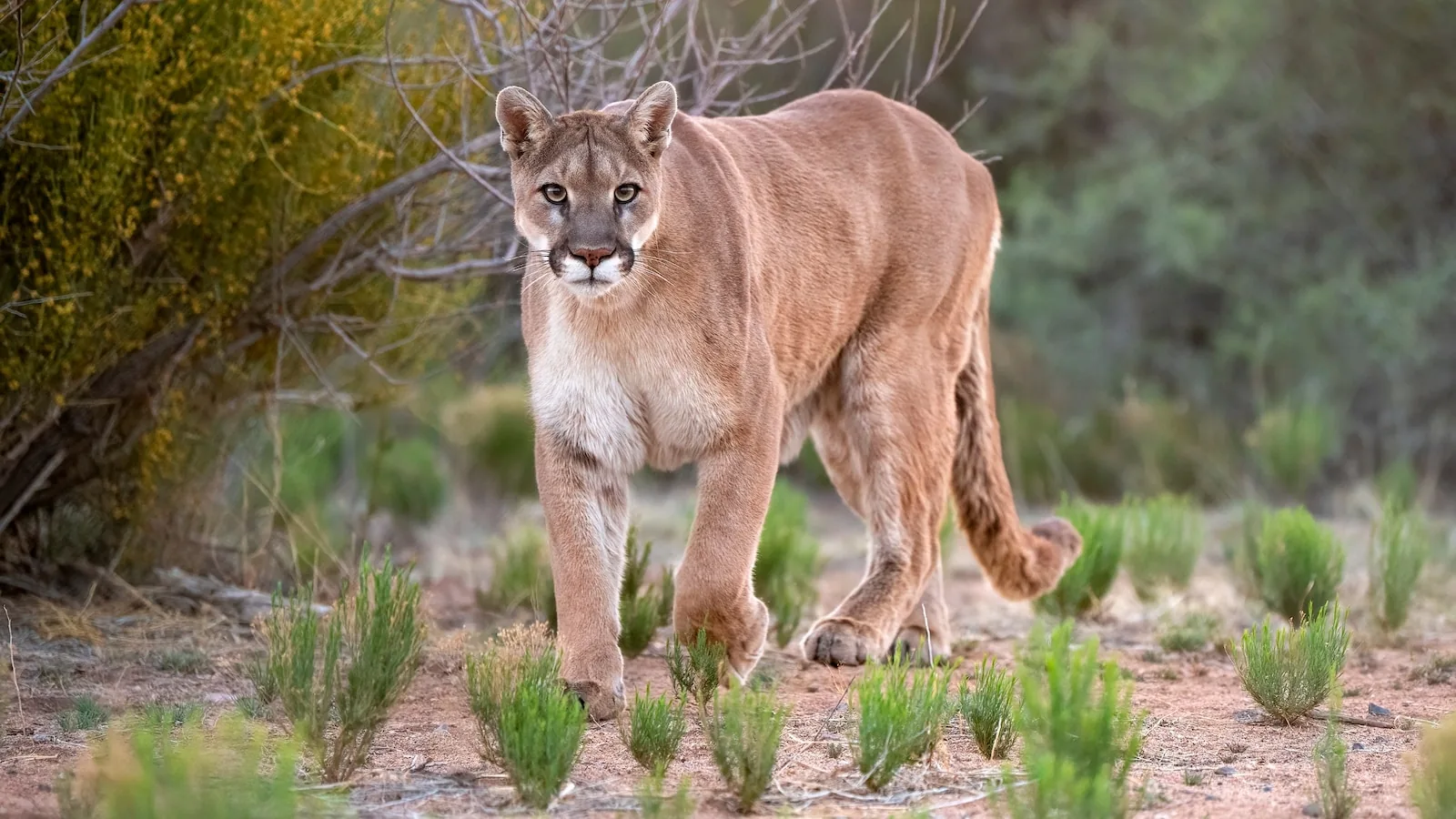
Mountain lions are large, tan-colored cats with long tails, rounded heads and powerful hind legs. Adults can weigh well over 100 pounds, and males are usually larger than females. They are built for stealth, speed and short bursts of power rather than long chases.
These cats hunt deer and other prey and usually try to avoid people. They move alone, are most active at dawn and dusk, and can live in a wide range of terrain, from mountains and forests to rough foothills and open spaces near development.
In California, mountain lions are present in many regions, including foothill and forest habitat near the Sierra Nevada. Attacks on humans are rare, and fatal attacks are rarer still, but wildlife officials say people should still treat any encounter as serious because an animal that feels threatened can act quickly.
If you encounter one
Wildlife officials generally advise people to stay calm, stand tall and make themselves look larger if they see a mountain lion. Do not run, crouch or turn your back. Back away slowly while keeping the animal in sight, and be ready to fight back if it approaches or attacks.
Families should keep children close and pets under control, especially at dawn, dusk and in areas with heavy deer traffic. If you are hiking, travel in groups when possible, keep noise levels up and stay alert on trails and in brushy areas where a lion could be hiding.
Never feed a mountain lion or try to approach it for a photo. If the animal is lingering near homes, trails or camps, call local law enforcement, animal control or the California Department of Fish and Wildlife right away.
What happens next
Authorities said the mountain lion’s body was collected for further examination after the attack. The sheriff’s office also said DNA from the scene matched the dead animal, helping confirm the identification.
State officials said the attack was the first fatal mountain lion incident in California in 20 years. They also noted that the last fatal attack in El Dorado County was in 1994.
Spotted a dangerous animal where you live? Report it to your state wildlife agency or local animal control.