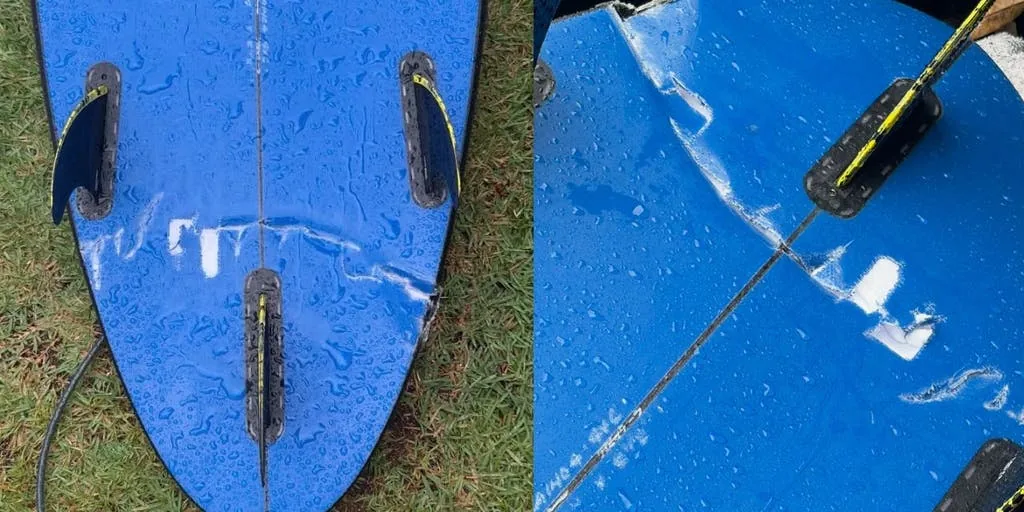
HONOLULU, HI — A 24-year-old surfer says an estimated 12-foot tiger shark bit through the back of his surfboard Tuesday at China Walls on Oahu’s South Shore, sending him into the water and charging again. He escaped with minor leg abrasions after a friend paddled over to help.
At a glance
- Animal: An estimated 12-foot tiger shark.
- Where: China Walls, a popular surf spot on Oahu’s South Shore in Hawaii.
- When: Tuesday afternoon.
- What happened: The shark bit through the back of a surfboard, knocked the surfer into the ocean, and charged again.
- Status: The surfer got out safely with a broken board.
- Anyone hurt: He reported minor abrasions on one leg.
What happened
Albert Westpfal, 24, was paddling over a reef when he said he heard the fiberglass crunch behind him. At first, he thought he had hit the reef, but when he turned around, he saw what he described as an aggressive tiger shark.
Photos of the board show the shark bit through the tail, close to the rear fin. Westpfal said the attack sent him off the board and into open water, where the shark came at him again.
In his account, shared by Honolulu Ocean Safety, Westpfal said he kicked the shark in the head and punched its nose as it approached. He said the animal thrashed and then backed off.
Westpfal also credited his friend Zach Sheerer, who had paddled out with him to surf the hurricane-fueled swell. He said Sheerer moved toward him right away after thinking he had been bitten.
About the animal
Tiger sharks are among the largest sharks found in Hawaiian waters. They can reach well over 10 feet long and have broad bodies with dark vertical bars that can fade as they age.
These sharks are generalist predators. They eat fish, rays, squid, turtles and other marine animals, and they are known to be curious around surf zones, drop-offs and reef edges.
In Hawaii, tiger sharks are part of the natural marine environment, and encounters can happen near popular beaches and surf breaks. They do not normally target people, but they are considered one of the shark species most often linked to serious bites worldwide.
If you encounter one
Wildlife officials and ocean safety experts generally advise staying calm, keeping the shark in sight if possible and getting out of the water as smoothly and quickly as you can. Avoid splashing, sudden movements or turning your back on the animal.
If a shark comes close, try to maintain a defensive posture and use any object available between you and the animal. For surfers and swimmers, a board, fins or even a camera can create a barrier long enough to back away.
People should leave the water immediately if a shark is seen nearby, alert others on shore and contact local ocean safety crews, lifeguards or the Hawaii Division of Aquatic Resources if needed. Children and pets should be kept well away from the water after any sighting.
What happens next
The account was shared publicly through Honolulu Ocean Safety, which is often used to warn beachgoers about ocean hazards and shark encounters. No further action was described in the information provided with Westpfal’s statement.
Because the incident happened during a period of large surf tied to Hurricane Lowell, ocean conditions were already dangerous. Officials typically urge extra caution around reef breaks and high-energy surf when visibility is limited.
Spotted a dangerous animal where you live? Report it to your state wildlife agency or local animal control.