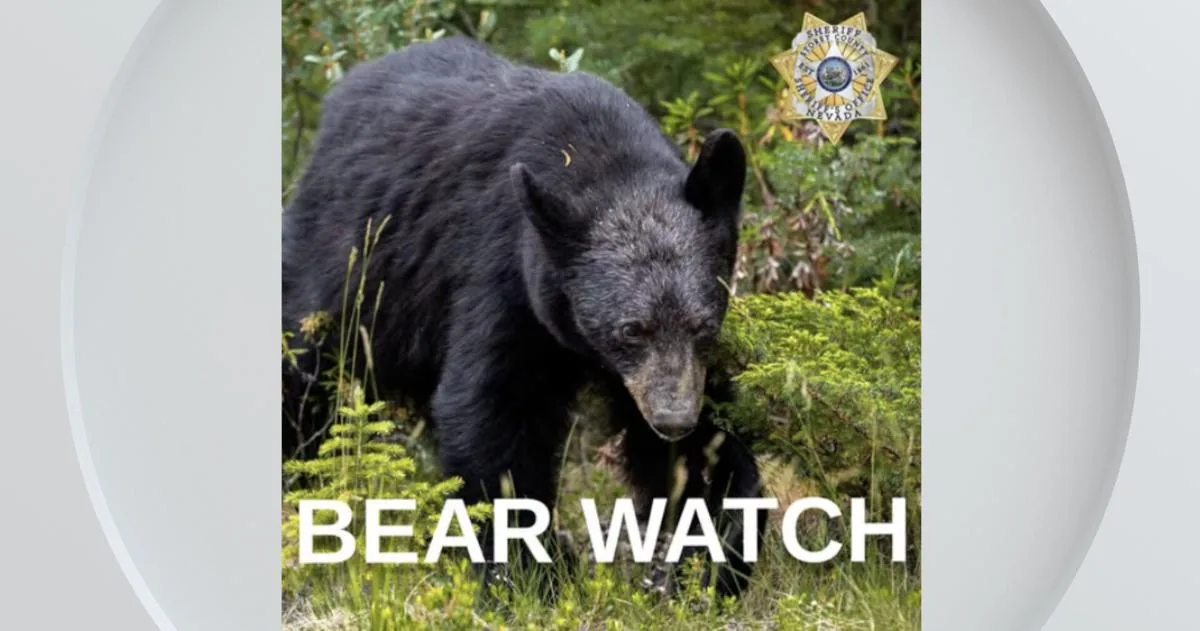
VIRGINIA CITY, NV — Storey County authorities are warning residents in Virginia City Highlands after reports of black bear sightings and an attack on livestock. Deputies say people should take steps now to reduce attractants and keep children, pets, and animals safer in bear country.
At a glance
- Animal: Black bear
- Where: Virginia City Highlands, Storey County, Nevada
- When: Reports were issued today
- What happened: Deputies received reports of bear sightings and an attack on livestock
- Status: Residents were warned to secure trash, remove food sources, and protect livestock, especially overnight
- Anyone hurt: No human injuries were reported
What happened
The Storey County Sheriff’s Office said it has received reports of black bears in the Virginia City Highlands area, along with an attack on livestock. The warning was issued to let residents know the animals have been active in the community and may be searching for food.
Deputies reminded people to secure trash and remove anything else that could attract bears. They also urged residents to keep a close watch on pets and children and to make sure livestock is protected, particularly at night when animals are most vulnerable.
The sheriff’s office did not provide details about the number of bears reported, where the livestock attack happened, or what kind of livestock was involved. The message focused instead on practical steps residents can take to avoid encounters and reduce the chance of further problems.
Anyone with an issue involving a bear was told to contact the Nevada Department of Wildlife’s Bear Hotline at 775-688-BEAR (2327) or local dispatch at 775-847-0950.
About the animal
Black bears are the most common bear species in North America. Adults are usually medium-sized compared with grizzlies, with a stocky body, short tail, rounded ears, and a coat that can range from black to brown, cinnamon, or even blonde in some areas.
They are opportunistic eaters. Their diet can include berries, nuts, insects, grasses, carrion, and human food when it is left out or easy to reach. In places where people live near wild habitat, bears often learn to associate trash, pet food, bird seed, and livestock feed with an easy meal.
Black bears live in many parts of the western United States, including Nevada. They usually try to avoid people, but they can become dangerous if they are surprised, habituated to food, or defending cubs or a food source. Pets and unsecured livestock can also be at risk when bears move through residential areas.
If you encounter one
Wildlife agencies generally advise people to stay calm, back away slowly, and give the bear plenty of room. Do not run, climb a tree, or try to approach the animal for photos. If the bear is near your home, bring children and pets inside right away.
Keep garbage secured, feed pets indoors if possible, and store livestock feed in a way that does not leave it exposed. At night, bring animals into secure enclosures when you can, and use fencing or other barriers recommended by local wildlife officials.
If a bear is behaving aggressively, lingering near homes, or threatening pets or livestock, contact local dispatch or the state wildlife agency rather than trying to handle it yourself. In Nevada, residents can call the Department of Wildlife Bear Hotline at 775-688-BEAR (2327) or local dispatch at 775-847-0950.
What happens next
Residents in the Virginia City Highlands are being urged to stay alert and reduce anything that might draw bears into the neighborhood. Officials want people to report continued sightings so wildlife staff can track activity and respond if needed.
The Nevada Department of Wildlife also directs residents to its Living with Bears information for more safety guidance and long-term prevention steps.
Spotted a dangerous animal where you live? Report it to your state wildlife agency or local animal control.