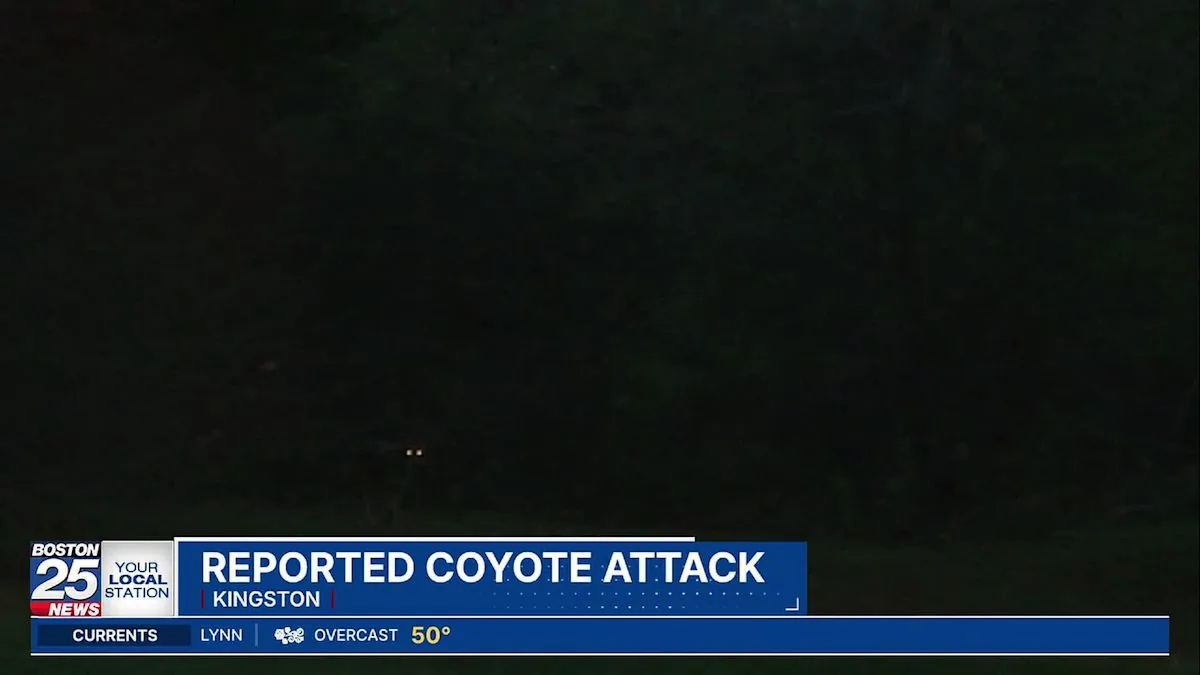
KINGSTON, MA — Residents in Kingston are being warned after an aggressive coyote attacked a man in broad daylight. Local officials say the animal’s behavior was unusual enough to raise concern, and people in the area are being urged to stay alert while the situation is monitored.
At a glance
- Animal: A coyote described as aggressive.
- Where: Kingston, Massachusetts.
- When: The attack happened in broad daylight.
- What happened: A coyote attacked a man and prompted a warning for residents.
- Status: Officials have warned the public and are monitoring the situation.
- Anyone hurt: The incident involved a man being attacked; no further injury details were provided.
What happened
Town residents were alerted after a coyote attacked a man during the day, according to the warning shared about the incident. Daytime aggression is taken seriously because coyotes usually avoid people, especially in busy residential areas.
Authorities have not publicly detailed what led up to the attack, but the event was significant enough to prompt a warning to the community. People living nearby are being told to be careful and to report any further sightings or unusual behavior.
When coyotes lose their fear of people or begin acting boldly around homes and streets, wildlife officials often treat that as a public-safety concern. That is especially true if the animal appears comfortable approaching people, pets, food sources, or yards.
Residents are being asked to keep their distance and avoid giving the animal any reason to stay in the area. In many cases, fast reporting helps officials decide whether added measures are needed.
About the animal
The coyote is a medium-sized wild canine with pointed ears, a narrow muzzle, and a bushy tail. Adults are generally smaller than wolves and larger than foxes, though their size can vary by region and season.
Coyotes are adaptable predators and scavengers. They eat small mammals such as mice and rabbits, along with fruits, insects, carrion, and sometimes pet food or unsecured garbage when it is available.
They are common across much of the United States, including suburban and semi-rural areas of New England. Most coyotes avoid people, but problems can develop when they become habituated, are fed, or associate neighborhoods with easy food.
In general, coyotes pose a low risk to people, but they can threaten small pets and may become more assertive if protected by cover, food sources, or den sites nearby. That is why unusual daytime behavior draws quick attention from wildlife officials.
If you encounter one
Wildlife officials generally advise people to stay calm, stand tall, and back away slowly if they see a coyote nearby. Do not run, turn your back, or let the animal approach.
Make yourself look bigger, make noise, and use available deterrents such as waving your arms, clapping, or carrying a noisemaker. If the coyote does not move off, keep increasing the distance between yourself and the animal.
Keep children close and pets on a short leash outdoors, especially near dawn, dusk, or in areas where coyotes have been seen. Never feed coyotes, leave pet food outside, or leave garbage unsecured, because food can draw them in and make them bolder.
If a coyote acts unusually aggressive, shows no fear of people, or approaches homes repeatedly, contact local animal control, police, or the state wildlife agency right away. Quick reports can help officials track patterns and decide on next steps.
What happens next
Residents in Kingston have been warned to remain alert while officials monitor the animal’s behavior. Additional advice may be issued if more sightings are reported or if the coyote continues acting aggressively.
People in the area are being encouraged to report any new encounters so wildlife officials can determine whether the animal is still active nearby and whether further action is needed.
Spotted a dangerous animal where you live? Report it to your state wildlife agency or local animal control.