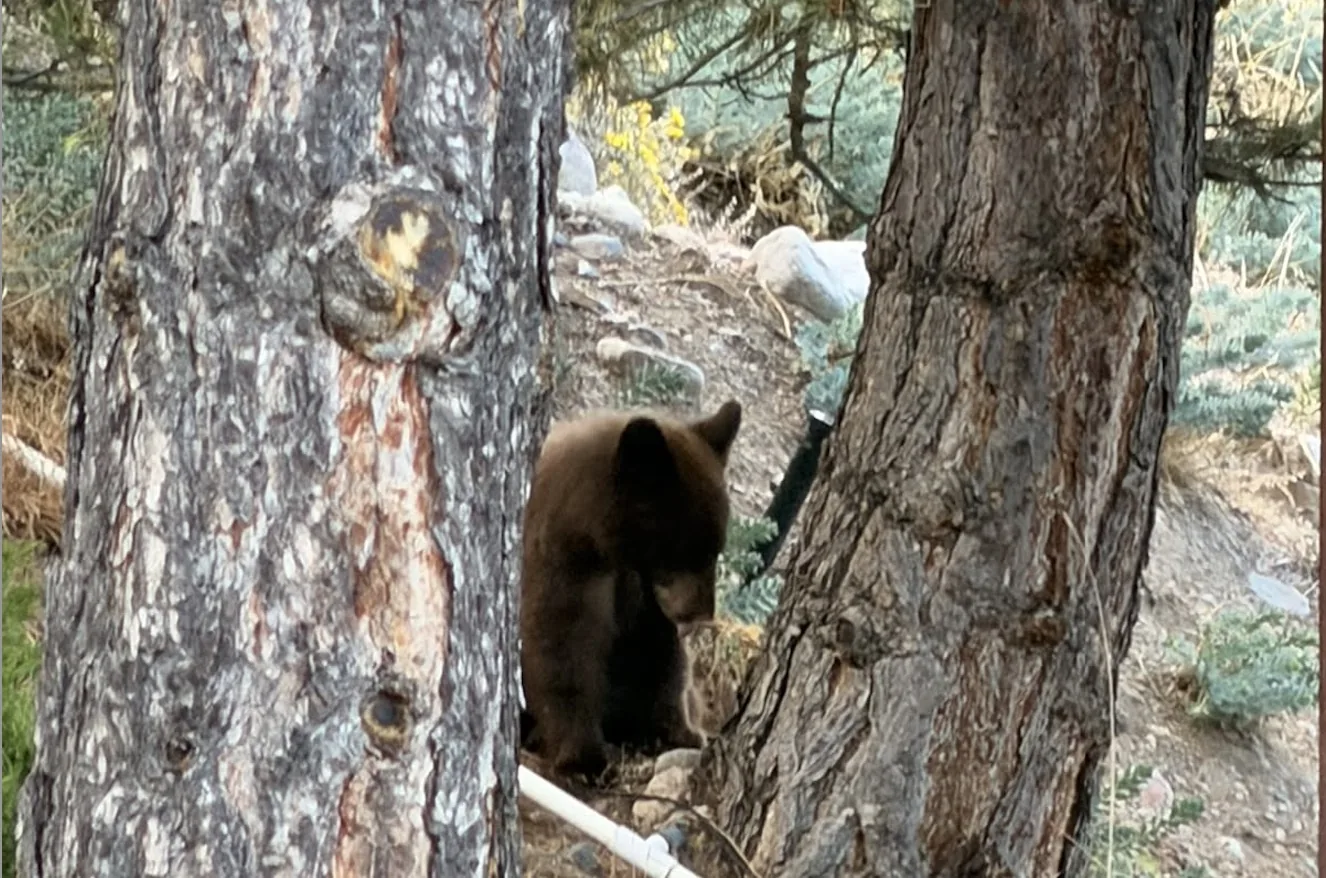
SALT LAKE CITY, UT — Utah wildlife biologists captured a young bear in Salt Lake City’s Avenues neighborhood Wednesday night after residents reported seeing it wander through the area for several days. Crews tranquilized the animal and removed it from a tree near Kay Rees Park.
At a glance
- Animal: A young bear
- Where: Salt Lake City’s Upper Avenues, including the area near Kay Rees Park
- When: Reports began Tuesday; the bear was captured Wednesday night
- What happened: Residents and wildlife officials tracked the bear for days before crews tranquilized it from a fire truck ladder
- Status: Biologists were assessing its health Thursday morning and considering relocation or euthanasia
- Anyone hurt: No injuries were reported
What happened
The Utah Division of Wildlife Resources began getting calls Tuesday about a bear roaming the Upper Avenues, where homes sit close to the foothills. Residents said the animal appeared to move through the neighborhood over several days before it was spotted again near sunset on Wednesday.
Lydia Foreman, one of the residents who saw the bear, said she and her husband noticed it from their window while preparing dinner. She said it sat near some trees behind the home, while their dogs reacted to the animal being so close.
Later Wednesday, the bear was seen climbing a tree at Kay Rees Park, 535 E. 14th Ave. Faith Jolley, a Utah Division of Wildlife Resources spokeswoman, said Utah Department of Natural Resources officers and state wildlife biologists were called in to capture it.
About 9:30 p.m., biologists climbed a Salt Lake City fire truck ladder and tranquilized the bear. Firefighters then helped remove it from the tree.
About the animal
The animal was described as a young bear, which in Utah is most likely a black bear. Black bears can range widely in color, though many are black, and adults can be large enough to look imposing even when they are not acting aggressively.
Black bears are generally omnivores, eating berries, nuts, roots, insects and, when available, human food or garbage. They are usually shy and prefer to avoid people, but they can spend more time near neighborhoods when natural food is scarce.
Utah wildlife officials said bear sightings have increased in communities this year. Bears are more likely to appear in lower-elevation areas in seasons or years when food in the mountains is limited, and sightings can rise when dry conditions reduce berries and other natural forage.
If you encounter one
Wildlife officials generally advise people to keep their distance, stay calm and give a bear a clear escape route. Do not run, approach for photos or try to feed the animal.
If you are outside with children or pets, bring them in right away and secure food, trash and pet bowls. A bear that finds easy food can become more comfortable around homes and may return.
Residents who see a bear in a neighborhood should call local police, animal control or the Utah Division of Wildlife Resources. Officials may want the location, time, direction of travel and whether the bear is in a tree, near homes or acting boldly.
What happens next
Biologists were still evaluating the bear’s health Thursday morning before deciding whether to relocate it or euthanize it. Jolley said that decision can depend on whether an animal acts aggressively, loses fear of people or keeps returning to neighborhoods.
Foreman said she hoped the bear would be given another chance elsewhere. Wildlife officials did not immediately say where the bear might be taken if it is relocated.
Spotted a dangerous animal where you live? Report it to your state wildlife agency or local animal control.