MONTEREY, CA — An autopsy has concluded that a 55-year-old swimmer died after a shark attack off the Monterey coast. Erica Fox was swimming near Lovers Point last December when she did not return with her group. Her body was later found washed ashore north of Santa Cruz.
At a glance
- Animal: Shark, believed to have been a great white.
- Where: Near Lovers Point, with Fox’s body later found north of Santa Cruz near Wilder Ranch State Park.
- When: Fox disappeared in December; the autopsy was released recently.
- What happened: The Santa Cruz County Sheriff-Coroner’s Office said one severe bite fractured her pelvis, severed a major artery and led to drowning.
- Status: The shark species was not identified in the autopsy, though a shark expert said the injuries were consistent with a great white.
- Anyone hurt: Fox died. No one else was reported injured in this incident.
What happened
The Santa Cruz County Sheriff-Coroner’s Office said Fox died from sharp and blunt force injuries and submersion in water after a shark attack. The autopsy says the bite was powerful enough to fracture her pelvis and sever a major artery.
Fox was part of a group swim and did not return to shore with the others. She was reported missing after failing to come back from the water with the group she co-founded, known as the Kelp Krawlers.
Her body was found six days later after washing ashore north of Santa Cruz near Wilder Ranch State Park. The autopsy also described deep injuries to her abdomen, both thighs and right knee, along with tears in her swimsuit and wetsuit that matched the wounds.
The report said Fox was still wearing a shark band on her ankle when she was discovered. The device is marketed as a magnetic deterrent meant to interfere with sharks’ electroreceptors.
About the animal
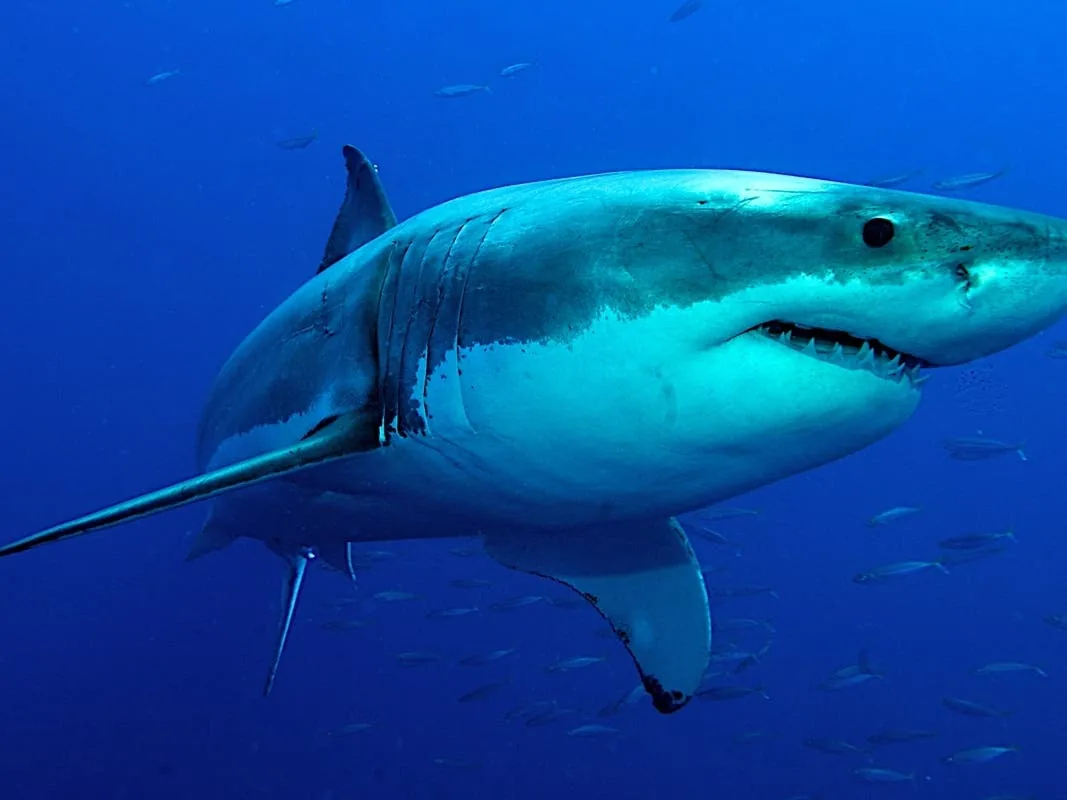
Great white sharks are large, powerful predators with streamlined bodies, dark upper coloring and pale undersides. Adults can grow very large, and their size and speed make them one of the best-known sharks in coastal waters.
They typically hunt marine mammals such as seals and sea lions, along with fish and other sea life. In California, researchers say most attacks on people are believed to be cases of mistaken identity rather than deliberate targeting.
Great whites are present along the California coast, and state records show that nearly 87 percent of reported shark attacks in California involved white sharks. Attacks are rare compared with the number of people who swim, surf and dive in the ocean every year.
If you encounter one
If a shark is seen nearby, leave the water as calmly and quickly as possible. Avoid splashing or sudden movements, and do not try to approach, feed or photograph the animal from close range.
Swimmers should stay in groups, avoid the water at dawn, dusk or in murky conditions, and keep clear of areas where seals or sea lions are present. Bright gear, fish blood and open wounds can increase risk in the ocean.
If a shark is acting aggressively or someone is injured, call 911 and alert lifeguards or local authorities right away. Local lifeguards, harbor patrols and state wildlife officials can also help decide whether an area should be cleared.
What happens next
The autopsy did not identify the shark species, but a shark lab director told the Monterey Herald the injuries were consistent with a great white that likely mistook Fox for a seal or sea lion.
Researchers at California State University Long Beach have also said warmer ocean temperatures and shifting habitat can affect shark activity along the coast, including in areas near Monterey. Fox’s death adds to a small number of serious shark incidents in California, where such attacks remain uncommon.
Spotted a dangerous animal where you live? Report it to your state wildlife agency or local animal control.