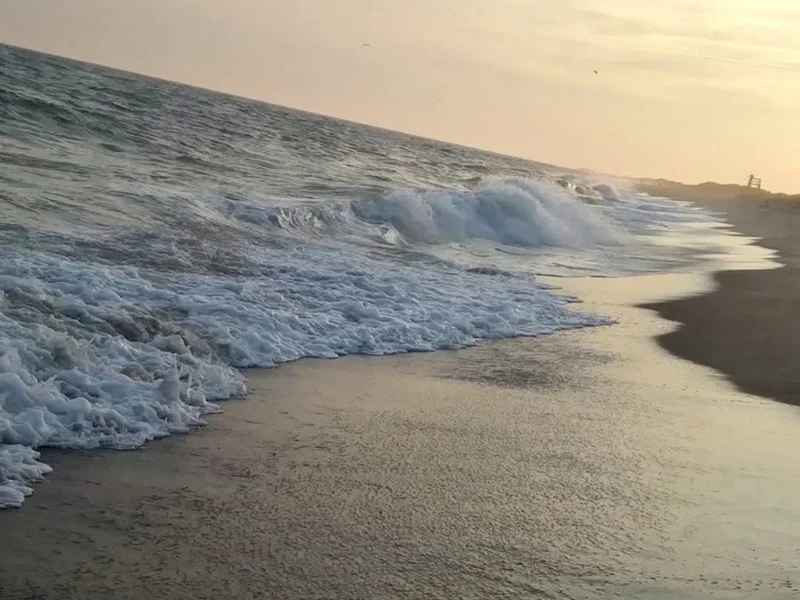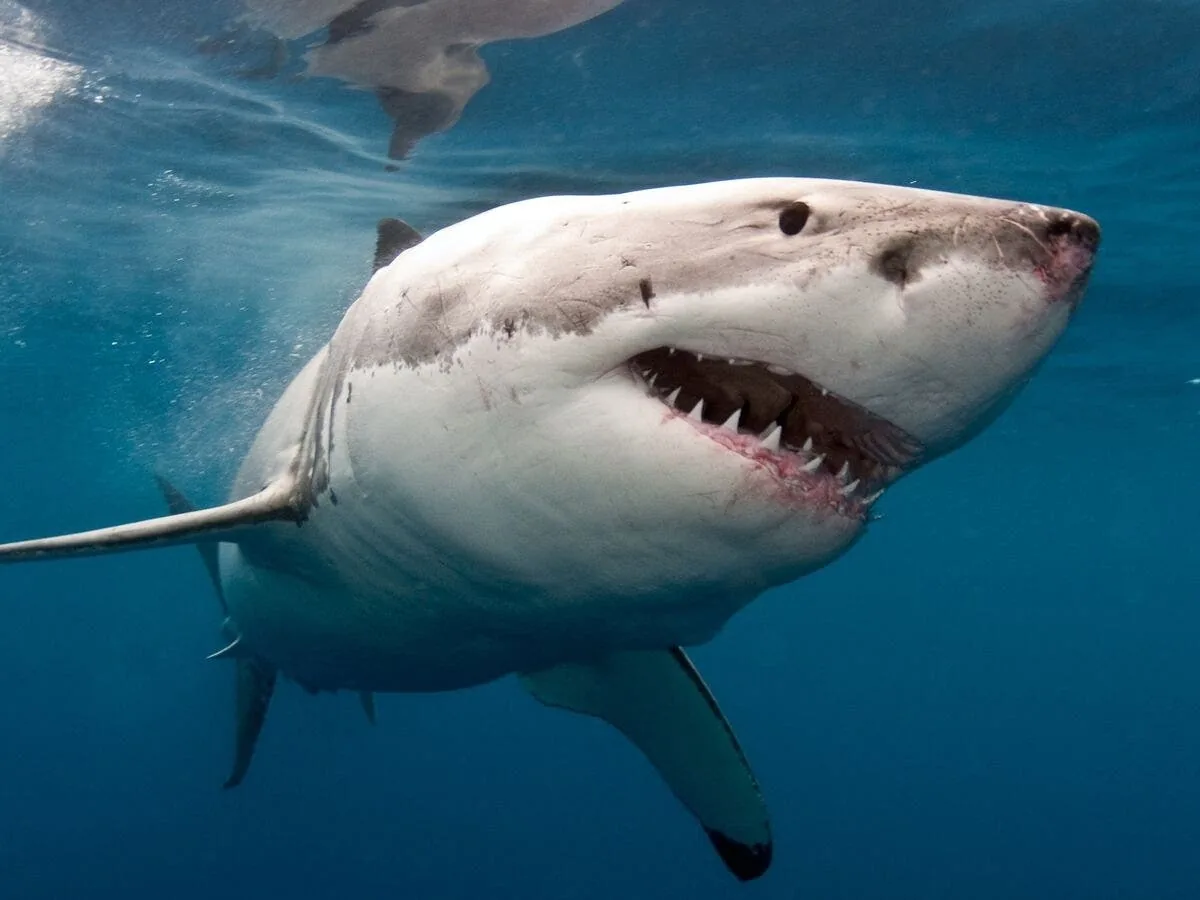
SANTA BARBARA COUNTY, CA — A surfer says a great white shark hit his board Saturday morning in northern Santa Barbara County, sending him out of the water but leaving him unhurt. Jack Canigiula said the shark clamped onto the back half of his board before letting go and allowing him to paddle safely to shore.
At a glance
- Animal: Great white shark.
- Where: Northern Santa Barbara County, along the California coast.
- When: Saturday morning.
- What happened: The shark approached from underneath, hit the back of the surfer’s board, and briefly had the board in its mouth.
- Status: The surfer made it back to the beach; the board was badly damaged.
- Anyone hurt: No injuries were reported.
What happened
Canigiula described the encounter in an Instagram caption, saying he was sitting farther out when “a huge dark shape” moved quickly beneath him. He said the shark struck from underneath and blew up the back half of the board.
He wrote that the impact lifted him about 2 feet out of the water. In his account, he was able to kick his legs forward, keep clear of the shark’s mouth and push himself away as the animal let go.
Canigiula said the shark had the board in its mouth for only a short time. Afterward, he paddled back to the beach and said he was “super grateful” to leave without a scratch.
He also shared photos showing the damaged surfboard after the encounter. No official injury report was cited in the post, and there was no indication of any broader beach closure connected to the incident.
About the animal
Great white sharks are among the largest predatory fish in the ocean. Adults can grow to impressive lengths and have a torpedo-shaped body, a pale underside and a darker back that helps them blend into the water.
They are powerful hunters that feed on fish, seals and other marine animals. Great whites usually do not target people, but a curious or mistaken bite can cause severe injury, which is why any close encounter in the water is treated seriously.
In California, shark incidents remain uncommon compared with the number of people who swim and surf there. State wildlife officials define a shark incident as a documented case in which a shark approaches and touches a person or their board, kayak or similar craft.
If you encounter one
If a shark is nearby, experts generally advise staying calm, keeping the animal in sight if possible and leaving the water in a controlled way. Sudden splashing can draw attention, so surfers and swimmers are usually told to move smoothly and avoid panic.
Do not try to touch, chase or corner the shark. Keep children close to shore, and get pets out of the water if there are signs of shark activity. If the animal appears aggressive or an encounter has just happened, notify lifeguards or local authorities right away.
People using surfboards, kayaks or paddleboards should also watch for wildlife advisories and follow local beach warnings. In California, local lifeguards, harbor officials or the state wildlife agency may be the right contacts after a shark sighting or incident.
What happens next
The account did not mention any formal response after the encounter. Canigiula said he returned to shore on his own after the shark let go of the board.
Because shark encounters along the California coast are rare but taken seriously, beachgoers in the area often rely on local safety guidance and seasonal notices when conditions change.
Spotted a dangerous animal where you live? Report it to your state wildlife agency or local animal control.